logo
BLOG
Home > blog > Company blog about New Techniques Identify and Measure Vacuum System Leaks
EVENTS
CONTACT US

New Techniques Identify and Measure Vacuum System Leaks

2026-01-01

Latest company news about New Techniques Identify and Measure Vacuum System Leaks

Imagine carefully constructing a vacuum system that should be perfectly sealed, yet consistently fails to achieve the desired vacuum level. Like a meticulously designed submarine that leaks at critical moments, this frustrating scenario often comes down to one culprit: gas leaks.

In industrial and scientific applications—from vacuum systems themselves to automotive and refrigeration components—airtight integrity is paramount. Experienced engineers understand that simple statements like "no detectable leaks" or "zero leakage rate" are insufficient as acceptance criteria. Proper specifications must clearly define permissible leakage rates under specific conditions, with acceptable levels varying by application.

What Exactly Is a Leak?

A leak represents a breach in a material barrier, allowing unintended passage of solids, liquids, or gases.

Leaks manifest in various forms depending on materials and connection types. Understanding these categories aids troubleshooting:

The Seven Common Leak Types

  • Detachable Connection Leaks: Occur at flanges, ground mating surfaces, or covers where seals (gaskets, O-rings) fail due to improper installation, material degradation, or surface damage.
  • Permanent Joint Leaks: Found in welds, brazed joints, or adhesive bonds compromised by poor fabrication or aging.
  • Porosity Leaks: Prevalent in polycrystalline materials and castings after mechanical stress (bending) or heat treatment, where microscopic voids interconnect.
  • Thermal Leaks: Emerge under extreme temperatures as differential thermal expansion stresses brazed joints, widening gaps.
  • Virtual (Apparent) Leaks: Not physical breaches but trapped gas in cavities/blind holes or evaporating liquids that gradually release, mimicking true leaks.
  • Indirect Leaks: Result from compromised utility lines (water, compressed air) introducing foreign substances into vacuum systems.
  • Cascade Leaks: Multiple interconnected leaks, like oil seals failing in rotary vane pump reservoirs, allowing oil ingress.

Additionally, permeation —gas diffusion through materials like rubber hoses—isn't technically leaking but affects vacuum performance.

Quantifying Leaks: The Leak Rate Standard

Absolute hermetic sealing is impractical and unnecessary. The critical factor is maintaining leakage rates low enough to preserve operational pressure requirements. This relationship is quantified as:

Leak rate (q L ) = 1 mbar·l/s means: In a 1-liter sealed vessel, pressure rises/falls by 1 mbar per second.

For high-vacuum systems, practical benchmarks are:

  • q L (air) < 10 -6 mbar·l/s → "Exceptionally tight"
  • q L (air) < 10 -5 mbar·l/s → "Adequately tight"
  • q L (air) > 10 -4 mbar·l/s → "Leaky"

Leak Detection: Location vs. Measurement

Leak testing serves two primary purposes:

  1. Locating leaks within systems
  2. Measuring leakage rates precisely

Methods differ by pressure conditions:

  • Vacuum Method: Detects inward flow (external pressure > internal vacuum)
  • Pressure Method: Identifies outward flow (pressurized interior)

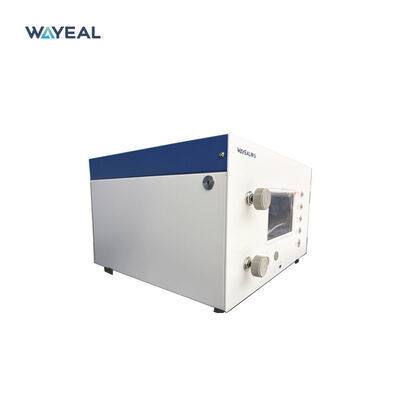
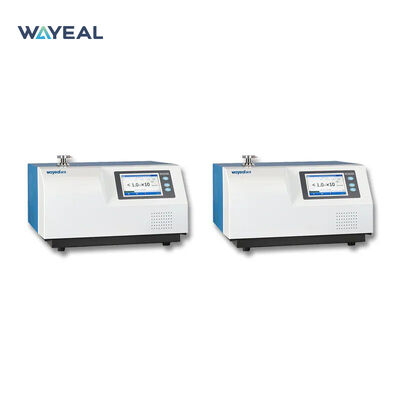
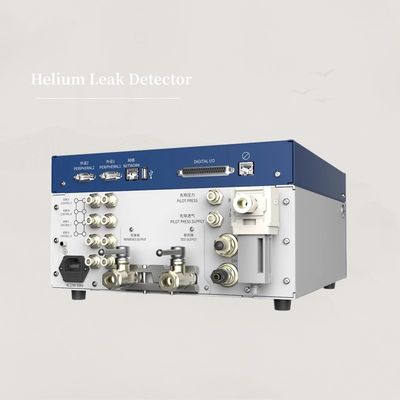
Helium's high diffusion rate makes it ideal for sensitive leak detection, with modern detectors capable of identifying leaks as small as 1 Å (10 -10 m) in diameter.

When vacuum systems underperform, two likely causes exist: true leaks or outgassing from surfaces. Mass spectrometry or timed pressure-rise tests help distinguish between them, with helium leak detectors offering rapid localization.

Send your inquiry directly to us

Privacy Policy China Good Quality Helium Leak Detector Supplier. Copyright © 2022-2026 Anhui Wanyi Science and Technology Co., Ltd. . All Rights Reserved.